FFP vs. SFP: Decoding the Focal Plane Debate for Your Air Rifle
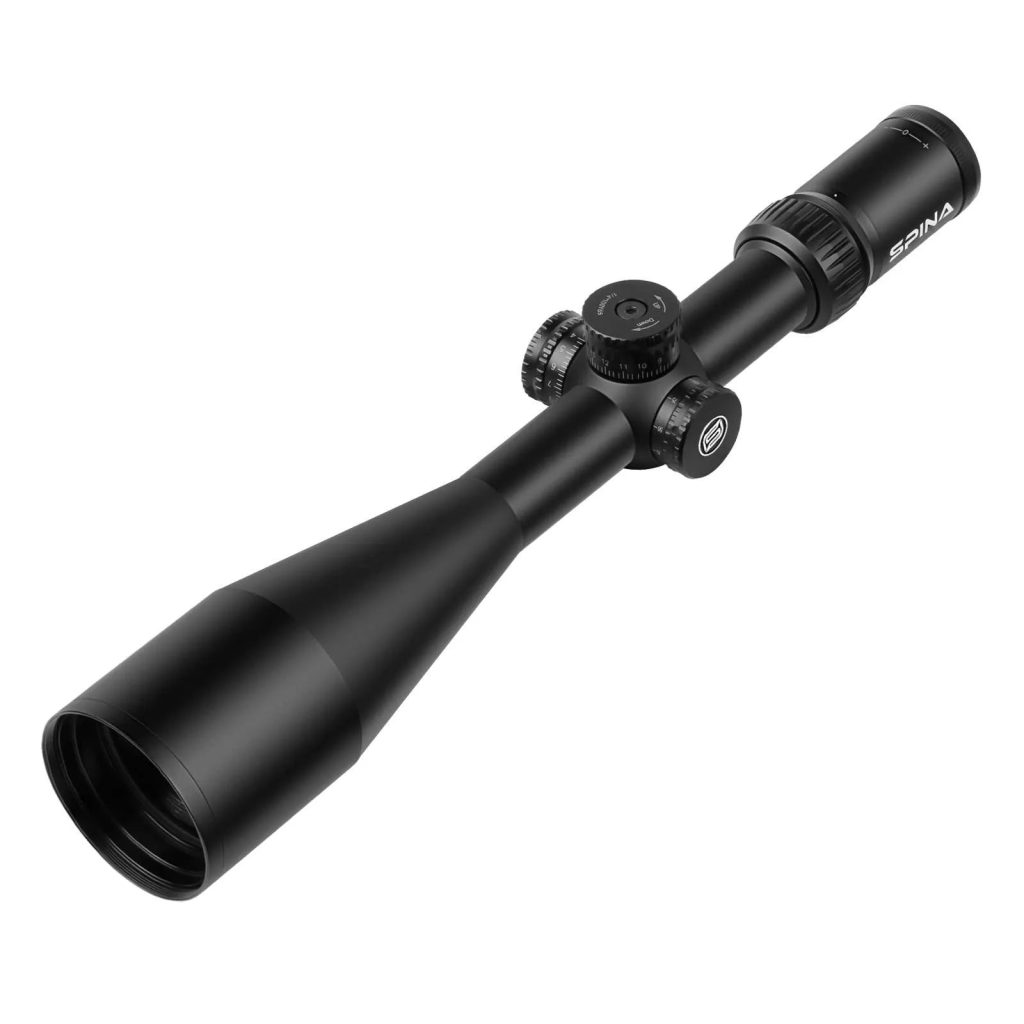
When you’re selecting a new scope for your precision PCP air rifle, the alphabet soup of features can be daunting. One of the most critical, and often misunderstood, choices is between a First Focal Plane (FFP) and Second Focal Plane (SFP) reticle. The difference isn’t just technical jargon; it fundamentally changes how you interact with your scope, especially when dealing with the looping trajectory of airgun projectiles. Understanding the FFP vs. SFP air rifle scope distinction is key to making a smart purchase.
Before we dive in, a quick safety reminder. Always wear proper eye protection when shooting. Ensure you have a safe and reliable backstop, and treat every airgun as if it were loaded. All shooting activities are for adults 18 and over.
What is a Focal Plane?
Inside every variable power scope, the reticle (your crosshairs) is placed in one of two positions relative to the magnification lenses. This position is its focal plane.
- First Focal Plane (FFP): The reticle is placed in front of the magnification assembly.
- Second Focal Plane (SFP): The reticle is placed behind the magnification assembly.
This simple difference in placement has major practical implications for the shooter.
The First Focal Plane (FFP) Scope
In an FFP scope, the reticle appears to grow and shrink as you change the magnification. At low power, the reticle is small; at high power, it’s large. Why would you want this? Because the reticle maintains the same size in relation to the target.
This means the spacing of your reticle’s hash marks or dots (its subtensions, measured in milliradians or MOA) is accurate at every single magnification setting. If one mil-dot of holdover is correct for a 50-yard shot at 10x power, it’s also correct at 18x, 6x, or any other setting.
Pros of FFP for Airgunners:
- Consistent Holdovers: This is the biggest advantage. Airgunners constantly manage trajectory drop. With an FFP scope, you can range a target, zoom in or out to get the best field of view, and use the correct holdover without any guesswork or calculation.
- Accurate Ranging: If your reticle allows for it, you can use it to estimate range at any magnification.
- Flexibility: Perfect for dynamic situations like pest control or long-range plinking where targets appear at unknown and varying distances.
Cons of FFP:
- Reticle Visibility: At very low magnification, the reticle can become so fine it’s difficult to see, especially against a cluttered background. At maximum magnification, it can become thick and potentially obscure small targets.
- Cost: FFP scopes are more complex to manufacture and tend to be more expensive than their SFP counterparts.
The Second Focal Plane (SFP) Scope
In an SFP scope, the reticle appears to stay the exact same size regardless of your magnification setting. The target grows and shrinks behind a static crosshair as you zoom in and out. For years, this was the standard for most riflescopes.
The critical detail for an SFP scope is that its subtensions (the mil-dots or MOA marks) are only accurate at one specific magnification, which is almost always the highest setting. If you use a holdover point at half the maximum magnification, it will only account for half the intended drop compensation.
Pros of SFP for Airgunners:
- Constant Reticle Size: The reticle is always perfectly visible and familiar, never too thick or too thin. This is comfortable for many shooters.
- Price: SFP scopes are generally more affordable, allowing you to get high-quality glass for less money.
- Simplicity: Excellent for shooters who work at known distances (like benchrest) or who tend to set their scope to its maximum power and leave it there.
Cons of SFP:
- Holdover Inaccuracy: If you’re not at the designated magnification, you must either do mental math to correct your holdover or dial the turret, which is slower. This is a significant drawback given how much the trajectory of different pellets and slugs can vary.
Which is Right for You?
When comparing the FFP vs SFP air rifle scope, the choice comes down to your primary shooting discipline.
Choose FFP if: You shoot at various unknown distances, engage in pest control, or enjoy long-range airgunning. The ability to use your holdovers at any power gives you a massive speed and accuracy advantage.
Choose SFP if: You primarily shoot from a bench at fixed distances, you’re on a tighter budget, or you prefer to “set and forget” your magnification at its highest power. For many casual plinkers, an SFP scope is perfectly adequate.
Ultimately, both systems work. However, the unique demands of compensating for airgun trajectory give FFP scopes a distinct edge in flexibility. As you browse our collection of optics and sights, consider how you shoot most often, and you’ll find the perfect match for your rifle.